


Some beauty secrets don’t need to be reinvented. They’ve been around for millennia, across civilizations, from Middle Eastern hammams to our modern bathrooms – and they still work just as well. Pumice is a perfect example.
Born from the depths of the Earth, pumice is a volcanic rock formed at temperatures of 500 to 600°C. When molten lava is projected into the air, it cools suddenly and the pressure shock creates thousands of micro-bubbles that give it its unique texture: at once abrasive and light, porous and precise, powerful and soft. It’s this exceptional natural structure that makes it the most effective exfoliant nature has ever produced – with no additives, no chemical processing.
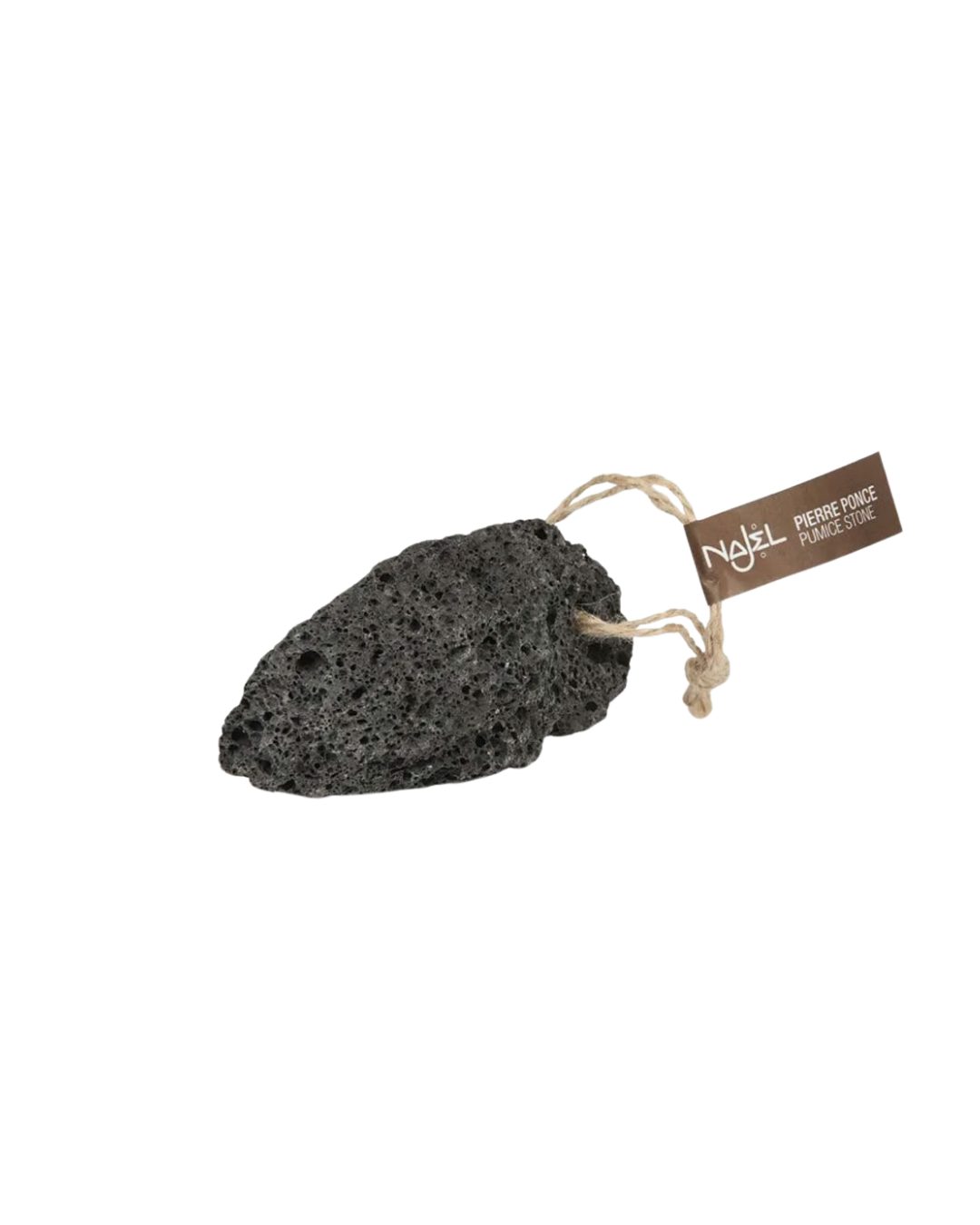
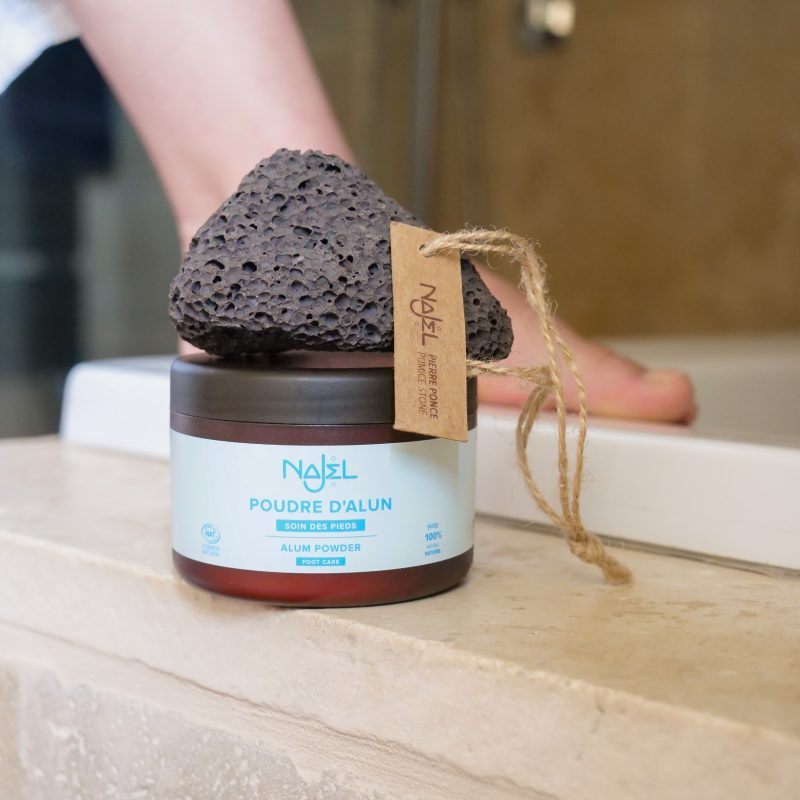
Pierre Ponce Najel is a black rough stone, selected for its optimal porosity and grain size, ideal for skin care. It attacks exactly where it’s needed: calluses on feet, thickened skin on heels, rough patches on elbows and knees – those precise places where skin accumulates layers of dead cells that creams alone can’t reach.
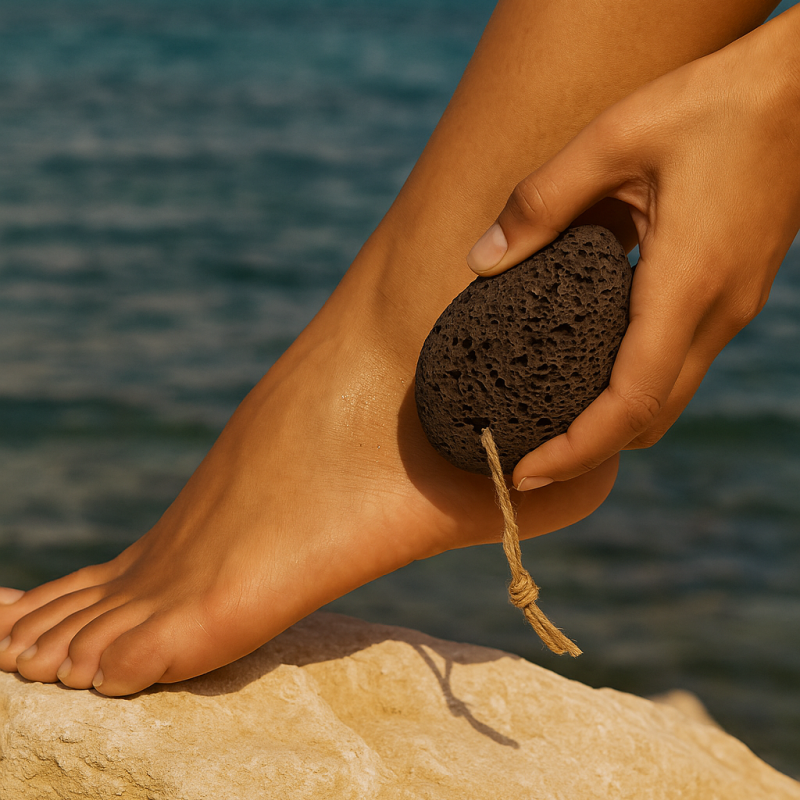
Its action is mechanical, progressive and precise. It files and exfoliates the stratum corneum on the surface, without ever attacking the living skin tissue underneath – as long as you observe one golden rule: always use it on damp, softened skin, with gentle, circular movements, without pressing hard.
What distinguishes pumice from all synthetic exfoliants? It improves with use. The more it’s used, the more its surface naturally polishes and softens – enabling it, over time, to be used on more sensitive areas such as toes or ankles. A living accessory that evolves with your skin.
And then there’s the eco-responsibility and zero waste aspect: no superfluous packaging, no plastic, no expiry date. A single stone lasts several years. It’s the antithesis of the disposable product – and the perfect embodiment of truly sustainable beauty.
🌋 100% natural volcanic rock – no additives or chemicals
♻️ Zero waste – reusable for years
🪢 Built-in cord for easy drying and storage
💚 The clean, long-lasting alternative to synthetic rasps and scrubs
👣 Ideal for feet, heels, elbows and knees
₨ 500 Original price was: ₨ 500.₨ 400Current price is: ₨ 400.
In stock
🌋 Natural Volcanic Rock Pumice stone is a volcanic rock formed when molten magma erupts. Its internal structure is riddled with millions of micro-pores created by rapid gas release during cooling — this is what gives it its granular, lightweight, yet abrasive texture. No treatment, no chemical processing: nature did it all, at 500°C.
👣 Exfoliating and smoothing
Its naturally abrasive texture effectively files down the stratum corneum — the dead cells that build up on high-pressure areas (heels, arch, toes, elbows, knees) and give that rough, dry, thickened look. By removing this surface layer, pumice stone reveals the fresh, smooth, soft skin underneath.
🩸 Boosts microcirculation
Massaging with pumice stone activates blood circulation in the treated areas. This mechanical stimulation brings oxygen and nutrients to the cells and supports cell renewal — a true natural anti-aging gesture for the feet.
🦵 Slows hair regrowth
Used regularly on the legs, pumice stone helps slow down and thin out hair regrowth. A light, daily use under the shower on the legs — without pressing — is enough to get smoother legs for longer between hair removals.
⏳ Improves with use
This is pumice stone’s unique feature: the more it’s used, the more its surface naturally polishes and softens. Over time, it can be used on more sensitive areas — toes, ankles, around the heels — that its initial texture wouldn’t have tolerated.
👣 Foot bath ritual (recommended 1 to 2 times a week)
1️⃣ Prepare a foot bath — Dissolve a handful of salts in a basin of warm water. Soak your feet for 15 minutes to soften and loosen thickened skin. This step determines how effective everything else will be.
2️⃣ Wet the pumice stone — It should be damp before touching the skin. This softens contact and improves glide.
3️⃣ Scrub from bottom to top — Heel, arch, underside of the toes. Slow, steady motions, bottom to top — not a harsh back-and-forth. No pain should be felt: if it is, ease off the pressure.
4️⃣ Keep a thin layer of hardened skin — Don’t try to remove it all. The stratum corneum protects the foot. The goal is to thin it, not eliminate it.
5️⃣ Rinse, dry, and moisturize — After scrubbing, skin is like a sponge. This is the ideal time to apply a vegetable oil or nourishing body milk — they penetrate twice as deeply on exfoliated skin.
🦵 For smooth legs (light daily use)
In the shower, on clean, damp skin, run the stone over your legs in very gentle circular motions, without pressing. 30 seconds per leg is enough.
💡 Stone care: After each use, rinse it thoroughly with clean water to remove skin residue. Hang it by its cord and let it air dry — never leave it sitting in stagnant water.
💡 Durability tip: Soak the stone in boiling water for 20 minutes once a month to disinfect it and extend its lifespan.
⏰ 1 to 2 times a week for feet — light daily use possible for legs
💡 Our experts’ tip: pumice stone is THE most underrated beauty step in any routine. People spend a fortune on foot creams but forget the essentials: as long as the stratum corneum is thick, no cream can penetrate properly. Exfoliate first, moisturize after — in that order, not the other way around. After 4 weeks of regular use paired with the Rich Coconut Milk, even the most damaged heels regain a softness you thought was lost.